+923554945378
[email protected]

Trek: K2 Base Camp via Baltoro Glacier & Gondogoro La
Duration: 16–21 days | Max Elevation: 5,585m | Distance: ~160km
“The Baltoro Glacier doesn’t care how many marathons you’ve run. It only cares if your knees can handle 160km of shifting rocks and your lungs can handle the altitude.”
Let me be direct: K2 Base Camp is one of the hardest treks on Earth. Not the hardest – but solidly in the top tier. It’s harder than Everest Base Camp. Harder than Kilimanjaro. Harder than the Inca Trail.
But here’s the good news: you don’t need to be an elite athlete. You need to be fit, prepared, and smart. I’ve guided 65-year-old accountants to Concordia. I’ve seen marathon runners turn back at Gore II. Fitness matters – but the right kind of fitness matters more.
This guide will tell you exactly how hard the K2 Base Camp trek really is – and give you a 16-week training plan to make sure you’re ready.
Part 1: Just How Hard Is the K2 Base Camp Trek?
Let’s break down the difficulty into five categories: physical, technical, altitude, mental, and logistical.
1. Physical Difficulty: Strenuous
Factor What It Means
Duration 16–21 days of continuous walking
Daily hiking 5–9 hours per day (average 6–7)
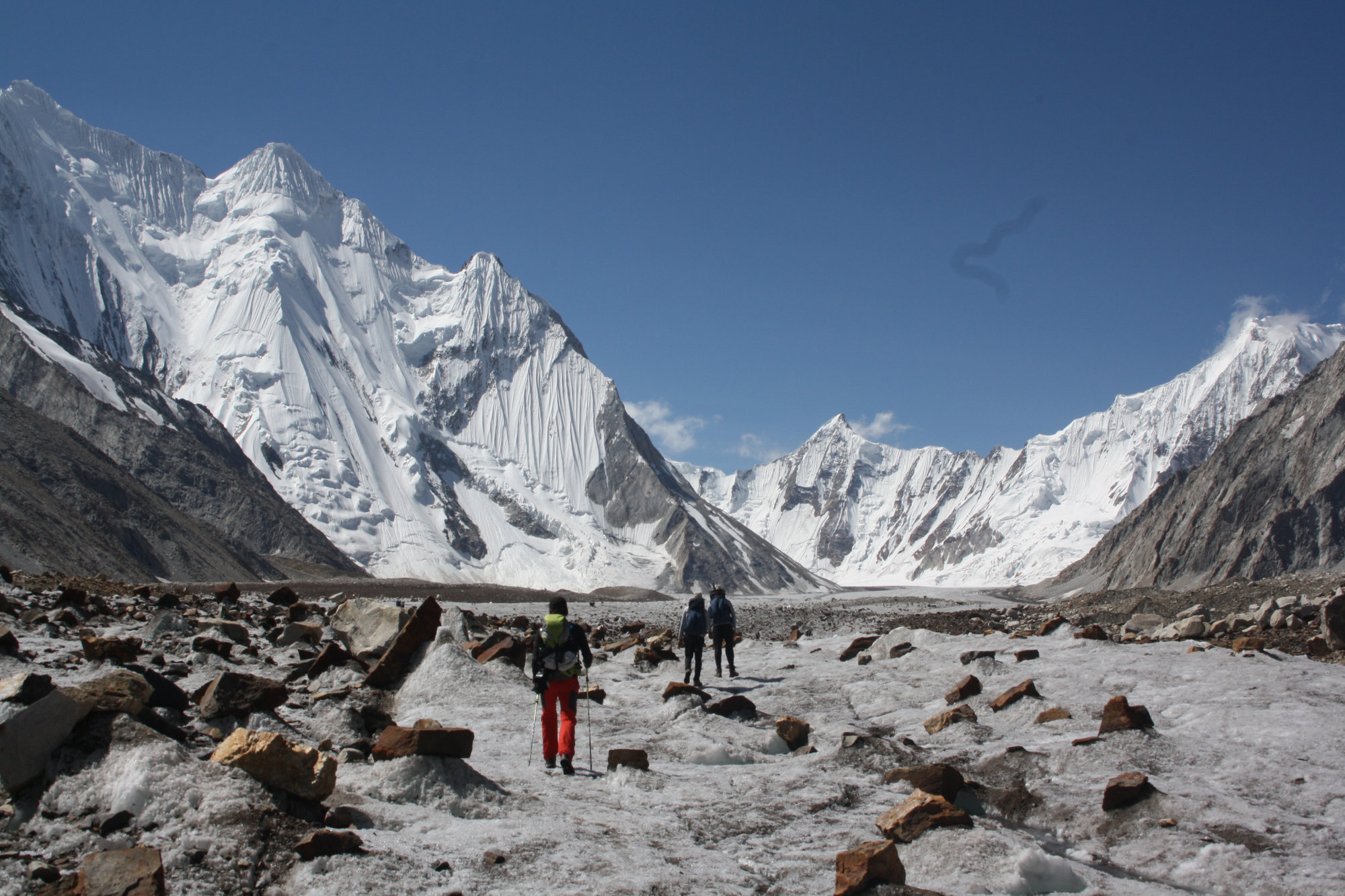
Terrain Loose glacier moraine (like walking on bowling balls), boulder fields, some glacier ice
Distance ~160km round trip
Elevation gain/loss You’ll climb and descend over 8,000m cumulative
Weight carried Daypack: 5–8kg (water, layers, camera, snacks)
The reality: The terrain is the biggest shock. Moraine walking uses different muscles than a groomed trail. Every step is unstable. You’ll be tired in ways you haven’t experienced before.
2. Technical Difficulty: Minimal (with a caveat)
Skill Required? Notes
Ropes No Guides handle route-finding
Crampons Yes (for Gondogoro La) Provided by operator
Ice axe Yes (for Gondogoro La) Provided by operator
Glacier travel experience Helpful but not required You’ll learn on the job
River crossings Yes Some crossings, water may be knee-deep
The reality: The standard K2 Base Camp trek (out and back) requires no technical skills. If you add Gondogoro La (the more common route), you need basic crampon and ice axe confidence – but your guide will teach you.
3. Altitude Difficulty: Very Real
Metric Value
Base Camp elevation 5,100m
Gondogoro La 5,585m
Days above 4,000m 7–10 days
Sleeping altitude Up to 4,600m (Concordia)
AMS risk Significant – most trekkers experience mild symptoms
The reality: Altitude is the great equalizer. Your fitness at sea level means almost nothing at 5,000m. Some fit people suffer. Some less-fit people thrive. Genetics play a role. But good acclimatization (slow ascent, rest days, hydration) dramatically improves your odds.
4. Mental Difficulty: The Hidden Challenge
Factor What to Expect
Isolation No villages, no Wi-Fi, no phone signal for 12+ days
Monotony The Baltoro Glacier looks the same for days – rock, ice, rock, ice
Discomfort Sleeping on moraine, no showers, basic food, cold nights
No escape If you quit on day 8, you still have 6 days to walk out
Uncertainty Weather can trap you. Flights cancel. Plans change.
The reality: Most people underestimate the mental difficulty. The physical part is straightforward – you put one foot in front of the other. The mental part is harder: the silence, the cold, the feeling of being truly far from help.
5. Logistical Difficulty: Complex
Factor What It Means
Travel 2 days to Skardu (drive or flight), 1 day to Askole
Permits Required – arranged by operator
Support You’ll have guides, porters, cooks
Weather Flights cancel 30% of the time. Build buffer days.
Cost $2,500–8,900 USD
The reality: You can’t just show up and hike. This requires planning, permits, and a reliable operator.
Part 2: Who Should (and Should NOT) Do This Trek
You SHOULD attempt K2 Base Camp if:
· ✅ You’ve done multi-day treks above 4,000m before (e.g., Everest Base Camp, Annapurna Circuit, Kilimanjaro)
· ✅ You can hike 6–8 hours on uneven terrain without being destroyed
· ✅ You know how your body reacts to altitude (you’ve been above 4,500m before)
· ✅ You’re comfortable with camping and basic hygiene (no showers for 12 days)
· ✅ You have the budget ($3,000–8,000 USD) and time (3 weeks minimum)
· ✅ You’re mentally prepared for isolation and discomfort
You should NOT attempt K2 Base Camp if:
· ❌ You’ve never done a multi-day trek before
· ❌ You have a known health condition that could be dangerous at altitude (heart, lung, or neurological issues – consult your doctor)
· ❌ You’re not willing to train specifically for this trek
· ❌ You need daily hot showers, Wi-Fi, or comfortable beds
· ❌ You have less than 18 days total for the trip (including travel)
· ❌ You have a history of severe altitude sickness
Part 3: The Fitness Components You Need
The K2 Base Camp trek requires four types of fitness:
1. Cardiovascular Endurance
You’ll be hiking 5–9 hours daily at altitude. Your heart and lungs need to be efficient.
Goal: Be able to hike 8–10km with 500m elevation gain at sea level without feeling destroyed.
2. Muscular Strength
Moraine walking is brutal on legs, knees, and core. Every step is unstable.
Goal: Strong legs (quads, hamstrings, calves), strong glutes, strong core.
3. Muscular Endurance
It’s not about how much you can lift – it’s about how many steps you can take.
Goal: Your muscles need to perform for 8+ hours without failing.
4. Balance & Proprioception
Walking on loose rock requires constant micro-adjustments. Poor balance = rolled ankles.
Goal: Stable ankles and good body awareness.
Part 4: The 6-Week Training Plan
This plan assumes you’re starting from a baseline of moderate fitness – you can walk 5km without getting tired, you exercise 1–2 times per week, and you have no major injuries.
If you’re less fit: Start earlier (4-10weeks) and spend more time in Phase 1.
If you’re more fit: You can skip ahead, but don’t skip the weighted step-ups. That’s the K2-specific movement.
Phase 1: Base Building (Weeks 1-2)
Goal: Build consistent exercise habits. Prepare joints and muscles for harder work.
Activity Frequency Intensity Duration
Walking (flat) 3–4 days/week Easy conversation pace 30–45 minutes
Hiking (rolling hills) 1 day/week Moderate 1–2 hours
Strength training 1days/week Moderate 30–45 minutes
Rest 1–2 days/week – –
Strength exercises (each session):
· Squats: 2 sets of 10–12 reps
· Lunges: 2 sets of 10–12 reps per leg
· Step-ups (low box, 6-8 inches): 2 sets of 10 reps per leg
· Plank: 2 sets of 30–45 seconds
· Glute bridges: 2 sets of 12–15 reps
By end of Phase 1: You can walk 60 minutes without stopping.
Phase 2: Building Endurance (Weeks 3-4)
Goal: Increase volume. Add weight to your training. Start simulating trek conditions.
Activity Frequency Intensity Duration
Hiking with daypack (5-7kg) 1 days/week Moderate to hard 1–2 hours
Stair climbing or treadmill incline 1 day/week Hard 30–45 minutes
Strength training 1 days/week Moderate to hard 45–60 minutes
Rest 1–2 days/week – –
Strength exercises (each session – heavier weights):
· Goblet squats: 2 sets of 8–10 reps
· Walking lunges: 2 sets of 12–15 reps per leg
· Step-ups (medium box, 12 inches) with light weight: 4 sets of 10 reps per leg
· Deadlifts (dumbbell or barbell): 3 sets of 8–10 reps
· Plank with shoulder taps: 2 sets of 30 seconds
· Calf raises (weighted): 2 sets of 15–20 reps
Weekend long hike: Once per week, do a 3–4 hour hike with 300–500m elevation gain. Wear your daypack with 5–7kg.
By end of Phase 2: You can hike 4 hours with weight.
Phase 3: Peak Training (Weeks 5-6)
Goal: Maximum volume. Heavy weight. Long days. Simulate the trek as closely as possible.
Activity Frequency Intensity Duration
Hiking with heavy pack (8-10kg) 2 days/week Hard 2-3 hours
Stair climbing or treadmill incline (weighted) 1–2 days/week Very hard 45–60 minutes
Strength training 1 days/week Hard 45–60 minutes
Rest 1–2 days/week – –
Strength exercises (heavy – this is where you build trek-specific strength):
· Weighted step-ups (high box, 16-18 inches) with 10-15kg: 4 sets of 8–10 reps per leg – THIS IS THE MOST IMPORTANT EXERCISE FOR K2
· Bulgarian split squats: 3 sets of 8–10 reps per leg
· Weighted lunges: 3 sets of 10–12 reps per leg
· Box jumps (low box): 3 sets of 8 reps
· Romanian deadlifts: 3 sets of 8–10 reps
· Hanging knee raises: 3 sets of 10–12 reps
· Farmer’s walk (carry heavy weight in each hand, walk 50m): 3 sets
Weekend long hike (crucial – do not skip):
· Week 6: 5–6 hours, 600–800m gain, 10kg pack
· Week 7: 6–7 hours, 800–1000m gain, 10kg pack
· Week 8: 7–8 hours, 1000–1200m gain, 10kg pack
· Week 9: 8–9 hours, 1200m+ gain, 10kg pack
· Week 10: 6–7 hours (recovery week), moderate gain
· Week 11: 4–5 hours (tapering begins), light pack
By end of Phase 3: You can hike 8+ hours with 10kg on varied terrain.
Phase 4: Taper & Rest (Weeks 12)
Goal: Let your body recover and super-compensate. Arrive at the trek fresh, not exhausted.
Activity Frequency Intensity Duration
Easy walking (no pack) 3–4 days/week Very easy 30–45 minutes
Light stretching or yoga 2–3 days/week Easy 20–30 minutes
No heavy strength training – – –
No long hikes – – –
What NOT to do in taper:
· No new exercises
· No trying to “cram” fitness (it doesn’t work)
· No heavy lifting
· No long hikes
By end of Phase 4: You feel rested, slightly antsy, and ready to go.
Part 5: Sample Weekly Schedule
Here’s what a serious training week looks like at peak phase:
Day Morning Afternoon/Evening
Monday Rest or light stretching –
Tuesday Strength training (heavy) 30-min easy walk
Wednesday Weighted stair climbing (45 min, 10kg) –
Thursday Strength training (heavy) 30-min easy walk
Friday Rest –
Saturday Long hike (7–8 hours, 10kg, 1000m gain) –
Sunday Easy recovery walk (30–45 min, no pack) Stretching
Total weekly volume: 10–12 hours of training.
Part 6: Cross-Training Options
If you can’t hike every weekend (no mountains nearby), substitute:
Instead of hiking… Do this…
Uphill hiking Stair climber at gym (60+ minutes, weighted)
Long hike with elevation Treadmill at 10-15% incline, 60–90 minutes, weighted
Downhill hiking Step-downs (strengthens quads for descent)
Uneven terrain Balance exercises (single-leg stands, Bosu ball)
Cardio alternatives (if you hate hiking):
· Running (trail running is best, but road running works)
· Cycling (builds quads but not weight-bearing – supplement with walking)
· Rowing (full body, low impact)
· Swimming (great for cardio, but not weight-bearing – do it in addition to walking, not instead of)
Part 7: Training for Gondogoro La Specifically
If you’re crossing Gondogoro La (5,585m), add these specific elements:
Focus Why Training Tip
Early starts You’ll wake up at midnight for the pass crossing Do one early morning hike per week (start at 4–5 AM)
Crampon walking You need to be comfortable on snow/ice Practice walking on grass or gravel with stiff boots (simulates crampon feel)
Steep snow The final push to the pass is steep Find the steepest hill you can and hike up it repeatedly
Mental toughness The pass day is long (10–12 hours) Do one 10-hour training day to know you can
Part 8: What Fitness Level Do You Actually Need? (Real Numbers)
Let me give you concrete targets based on trekkers I’ve guided:
Minimum Acceptable Fitness (you’ll struggle but probably finish)
· Hiking: Can hike 6 hours on flat terrain with 5kg pack
· Cardio: Can walk up 20 flights of stairs without stopping
· Strength: Can do 15 bodyweight squats
· Previous altitude experience: None required but helpful
Outcome: You’ll be slow. You’ll be tired. You may need a porter for your daypack. But you’ll likely finish.
Recommended Fitness (you’ll enjoy the trek)
· Hiking: Can hike 8 hours on hilly terrain with 8kg pack
· Cardio: Can climb 50 floors (stair climber) in 30 minutes with 5kg pack
· Strength: Can do 20 weighted step-ups (16-inch box) per leg with 10kg
· Previous altitude experience: At least one trek above 4,000m
Outcome: You’ll keep up with the group. You’ll have energy for side hikes. You’ll enjoy the experience.
Elite Fitness (you’ll crush it)
· Hiking: Can hike 10+ hours on mountainous terrain with 10kg pack
· Cardio: Sub-25 minute 5km run or sub-2 hour half marathon
· Strength: Can do 30 weighted step-ups per leg with 15kg
· Previous altitude experience: Multiple treks above 5,000m
Outcome: You’ll be waiting for the group. You’ll do extra side hikes. You’ll wonder what the fuss is about.
Be honest with yourself. Most people overestimate their fitness. The K2 trek humbles everyone.
Part 9: Testing Your Fitness Before You Go
Three simple tests to see if you’re ready:
Test 1: The Stair Climber Challenge
· Load: 7kg daypack
· Duration: 60 minutes
· Pace: 50+ floors per hour
· Pass: You complete 60 minutes without stopping, heart rate under 150
Test 2: The Long Hike Challenge
· Load: 8kg
· Distance: 15km
· Elevation gain: 800m
· Duration: Under 5 hours (including breaks)
· Pass: You finish without knee pain and can walk normally the next day
Test 3: The Back-to-Back Challenge
· Day 1: 6-hour hike with 600m gain, 8kg pack
· Day 2: 5-hour hike with 400m gain, 8kg pack
· Pass: You feel tired but functional on Day 2
If you pass all three, you’re ready.
Part 10: Common Training Mistakes
Mistake 1: Only Walking on Pavement
Moraine is nothing like pavement. You need uneven terrain. Find trails, fire roads, or at least grass fields.
Mistake 2: Ignoring Downhill Training
Most people focus on going up. The descent destroys knees. Train downhill – step-downs, eccentric squats, downhill hiking.
Mistake 3: Not Training with Weight
Hiking with a daypack is different from hiking without one. Train with your actual trekking weight (5–8kg).
Mistake 4: Overtraining Before Departure
Your last long hike should be 10–14 days before you leave. Arrive rested, not destroyed.
Mistake 5: Skipping Strength Training
Walking alone is not enough. You need strong legs, glutes, and core to handle moraine. Strength training prevents injury.
Part 11: Nutrition for Training
Goal What to Eat When
Sustained energy Oats, quinoa, brown rice, sweet potatoes Pre-hike meal (2 hours before)
Muscle repair Eggs, chicken, lentils, Greek yogurt Post-hike (within 30 minutes)
Hydration Water + electrolytes Constantly
Recovery Protein shake, chocolate milk Within 30 minutes of finishing
During long training hikes (3+ hours): Eat 200–300 calories per hour. Energy gels, granola bars, nuts, dried fruit.
Part 12: Injury Prevention
Common Injury Prevention
Knee pain Strong quads (step-ups, squats). Trekking poles. Downhill training.
Ankle sprains Balance exercises (single-leg stands). Good boots. Trekking poles.
Blisters Properly broken-in boots. Merino socks. Stop and tape hot spots immediately.
Back pain Strong core (planks, dead bugs). Proper pack fit.
Altitude sickness Cannot be trained. But fitness helps you recover faster.
Part 13: Sample Training Week by Week (Quick Reference)
Week Phase Long Hike Duration Pack Weight Key Focus
1 Base 1–2 hrs None Build habit
2 Base 1–2 hrs None Increase frequency
3 Base 2–3 hrs 3–5kg Add light weight
4 Base 2–3 hrs 5kg Recovery week
5 Endurance 3–4 hrs 5–7kg Add elevation
6 Endurance 4 hrs 7kg Weighted step-ups
7 Endurance 4–5 hrs 7kg Back-to-back days
8 Endurance 5 hrs 7kg Recovery week
9 Peak 5–6 hrs 8–10kg Increase weight
10 Peak 6–7 hrs 8–10kg Add elevation
11 Peak 7–8 hrs 10kg Maximum volume
12 Peak 8–9 hrs 10kg Longest hike
13 Peak 6–7 hrs 8kg Recovery week
14 Peak 4–5 hrs 5kg Taper begins
15 Taper Easy walks None Rest
16 Taper Easy walks None Travel week
The Bottom Line
The K2 Base Camp trek is hard. Anyone who tells you otherwise is lying or trying to sell you something.
But here’s the truth I’ve learned from guiding this trek for years: it’s not about being the fittest person on the mountain. It’s about being the most prepared.
I’ve seen ultramarathoners turn back at Concordia because their knees gave out on the moraine. I’ve seen 60-year-old accountants stand at K2 Base Camp in tears because they trained smart and listened to their bodies.
Fitness matters. But specific fitness matters more.
Follow this plan. Train the right muscles. Practice with weight. Test your gear. And when you’re standing at Concordia, looking up at four 8,000m peaks, you’ll know why you put in the work.
See you on the Baltoro.