+923554945378 tours@PamirCrest.com

Spantik Peak Expedition 2027

0
Price
From$5,000
Room 1 :
Room 1 :
* Please select all required fields to proceed to the next step.

Proceed Booking

Save To Wish List

Adding item to wishlist requires an account

2

Get a Question?

Do not hesitate to give us a call. We are an expert team and we are happy to talk to you.

+92 355 4265675

tours@PamirCrest.com

35 Days
Islamabad
Skardu
Min Age : 18+

Skardu, Pakistan

Spantik Peak Expedition

35 Days

Starting from 5,000$

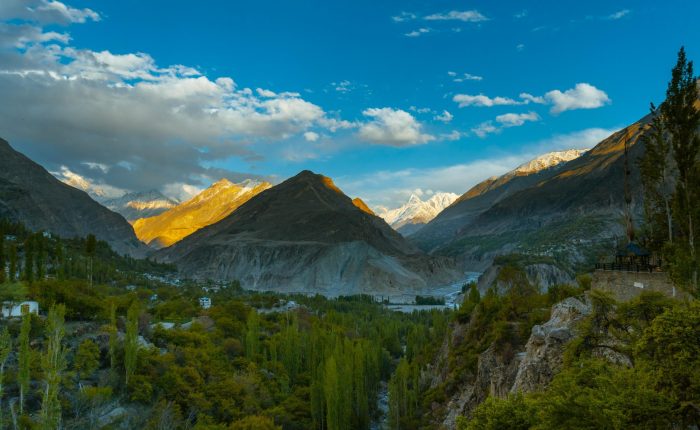
We offer a 35-day itinerary for Spantik Peak, beginning with your arrival in Islamabad. Karakorum Expeditions ensures your journey is enjoyable, adventurous, and seamless, taking care of all logistics, accommodations, food, and travel arrangements. Despite Spantik Peak being located in Nagar Valley, the climbing route starts from the Baltistan side. After a briefing at the Ministry of Tourism, we arrange your flight to Skardu, followed by trekking across the Chogolungma glacier to reach the base camp. The ascent to the 7027-meter Spantik Peak begins in the Arandu region of Baltistan, also known as little Tibet. Ready to join our next expedition? Contact us for details.

  • Altitude 7,027m (23,054ft)
  • Group Size 12-15 People
  • Grade Medium
  • Walking 6 – 8 Hours

Available Expedition

Start date Name Price  book
August 10 2027 Spantik Expedition $5,000 BOOK NOW


Detail about the package

What's included

Itinerary
Cost included
Cost not included
Equipment List
  • Day 01 Islamabad Departure
  • Day 02 Islamabad – Welcome reception (briefing) at Alpine Club of Pakistan.
  • Day 03: Skardu/Chilas—Fly to Skardu at 0930 hrs. Upon arrival, transfer to the hotel for overnight. Sightseeing around Skardu. The 55-minute flight to Skardu is a unique experience, flying between the towering icy peaks of the mighty Himalayan and rugged Karakorum ranges with extraordinary and unforgettable aerial views of clusters of mountains and glaciers. While flying, don’t miss the most spectacular views of Nanga Parbat (8124m) and K2 (8611m) from the cockpit. These two mountains tower over all the others. In case of cancellation of the flight (12–14 hrs), drive by coach to Chilas (480 km) on the Karakoram Highway. Overnight at a hotel. Driving on the KKH is exciting. The KKH is one of the most spectacular roads and the world’s highest metalled border crossing. It connects Pakistan and China, stretching over a distance of 1300 km between Islamabad and Kashgar, winding through three mountain ranges and following the ancient Silk Route along the Indus Valley to the Chinese border at Khunjerab Pass.
  • Day 04 Chilas/Skardu 1. Day free at Skardu 2. If you are driving, complete the road journey (07–08 hrs) to Skardu (275 km). En route, stop at a viewpoint near Thalichi to take a view of Nanga Parbat. Austrian climber Hermann Bhul climbed this face on July 3, 1953. It is a nice spot to take pictures in combination with the Indus and Nanga Parbat in the background. We will cross the Alam Bridge over the Gilgit River to continue our journey towards Skardu and drive on Skardu Road along the right bank of the Indus River. Along the route, we will have close views of Nanga Parbat, the confluence of the Indus and Gilgit Rivers, and junctions of the three mightiest ranges of the Himalayas, Karakoram, and Hindu Kush, as well as the rapids and falls of the Indus River. The town of Skardu (2234m) is situated along the south side of the Indus River. It is a broad valley about 40 km long and 10 km wide. Skardu is now the administrative center of the district and also the transportation and commercial center of the Baltistan region.
  • Day 05: Skardu to Arandu. It’s an early start because of the long day journey. The road to Shigar Valley bridges the Indus from Thorego, some (10 km) east of Skardu. The road then runs through the sand dunes before climbing over a shoulder of a mountain, from where a majestic view of the entire Shigar Valley can be seen up to the junction of the Braldu and Basha Rivers. The road then descends to the Shigar village (32 km). From Shigar, the jeep trek goes up the West Bank of the river. En route, at Chu Tron we can see hot sulphur springs with separate bathing huts for men and women. The jeep track goes up the valley to the beautiful village of Doko (20 km), from where we trek to Arandu, the last village at the snout of the wonderful (38 km) Chogo Lungma Glacier. The trail starts through walnut groves and then goes up and down the hillside with beautiful views of cultivated fields and villages on the other side of the river. It is an easy walk up to Sesko, beyond which it becomes stony and slippery due to landslides. After Bulcho, the valley opens up, and after trekking about 5 hours from Doko, we reach Arandu. Overnight at camp above the village at about 2950 meters.
  • Day 06: From Arandu to Bukhum. It takes about 8 hrs to reach Bukhum, which is a summer settlement. The trail follows the Basha River up to the snout of the Chogo Lungma Glacier. After crossing the glacier, follow the northern lateral moraine to Bukhum. Overnight at camp.
  • Day 07: Bukhum to Khurumal. It is a 5–8 hr trek. Watching the magnificent views of the pyramid of Spantik, passing through Manchikera, which is a summer settlement, we reach another summer settlement of Khurumal overnight at camp.
  • Day 08: Khurumal to Bolucho. It is a relatively short stage, which takes 4–5 hrs. Passing through the summer settlement of Gharincho and a small lake, and enjoying the excellent views of Spantik and Laila Peaks, we reach Bolucho, which is situated at the base of the Bolucho Glacier. Overnight at camp at about 3,900 meters on green ground with water.
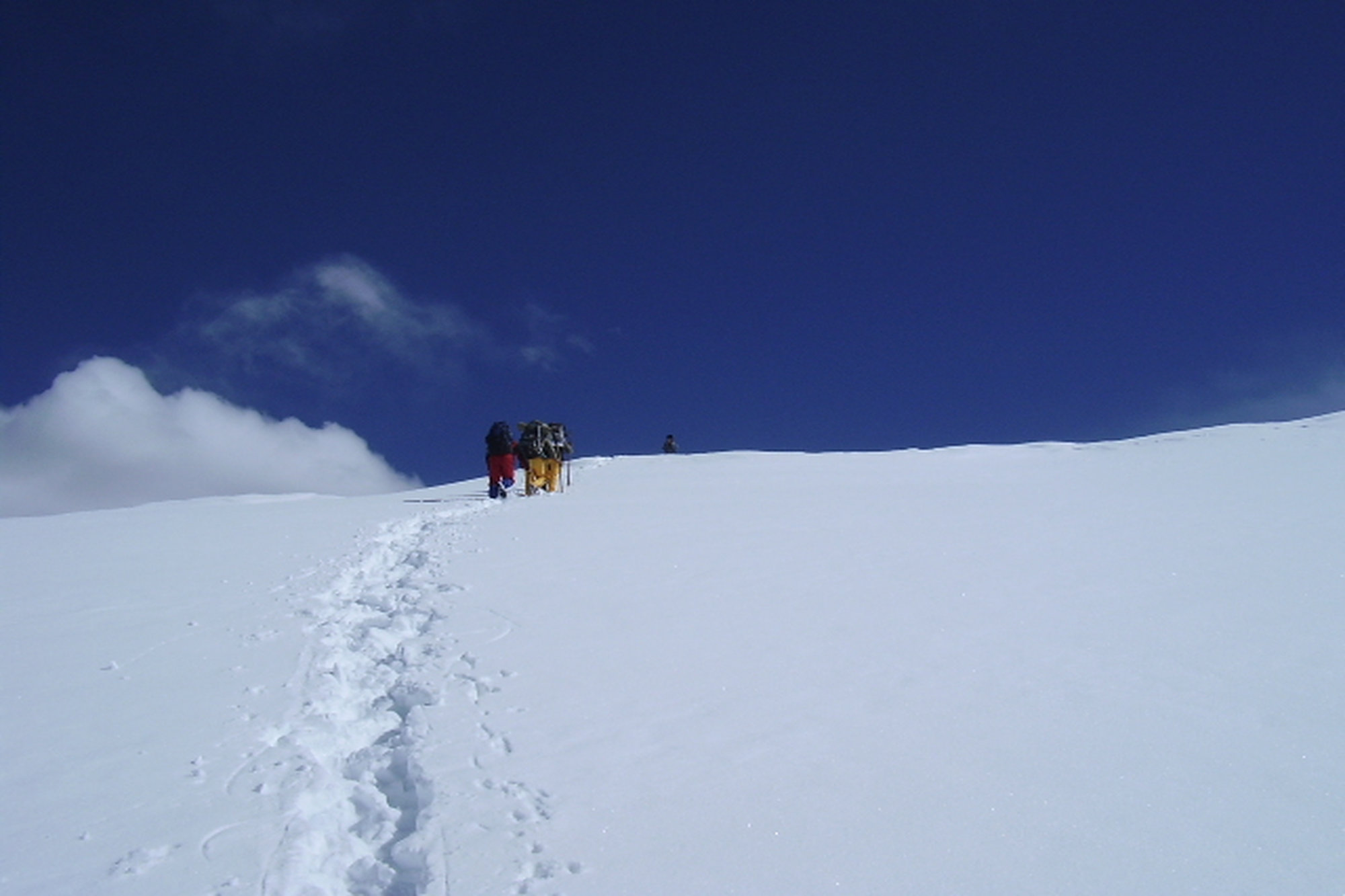
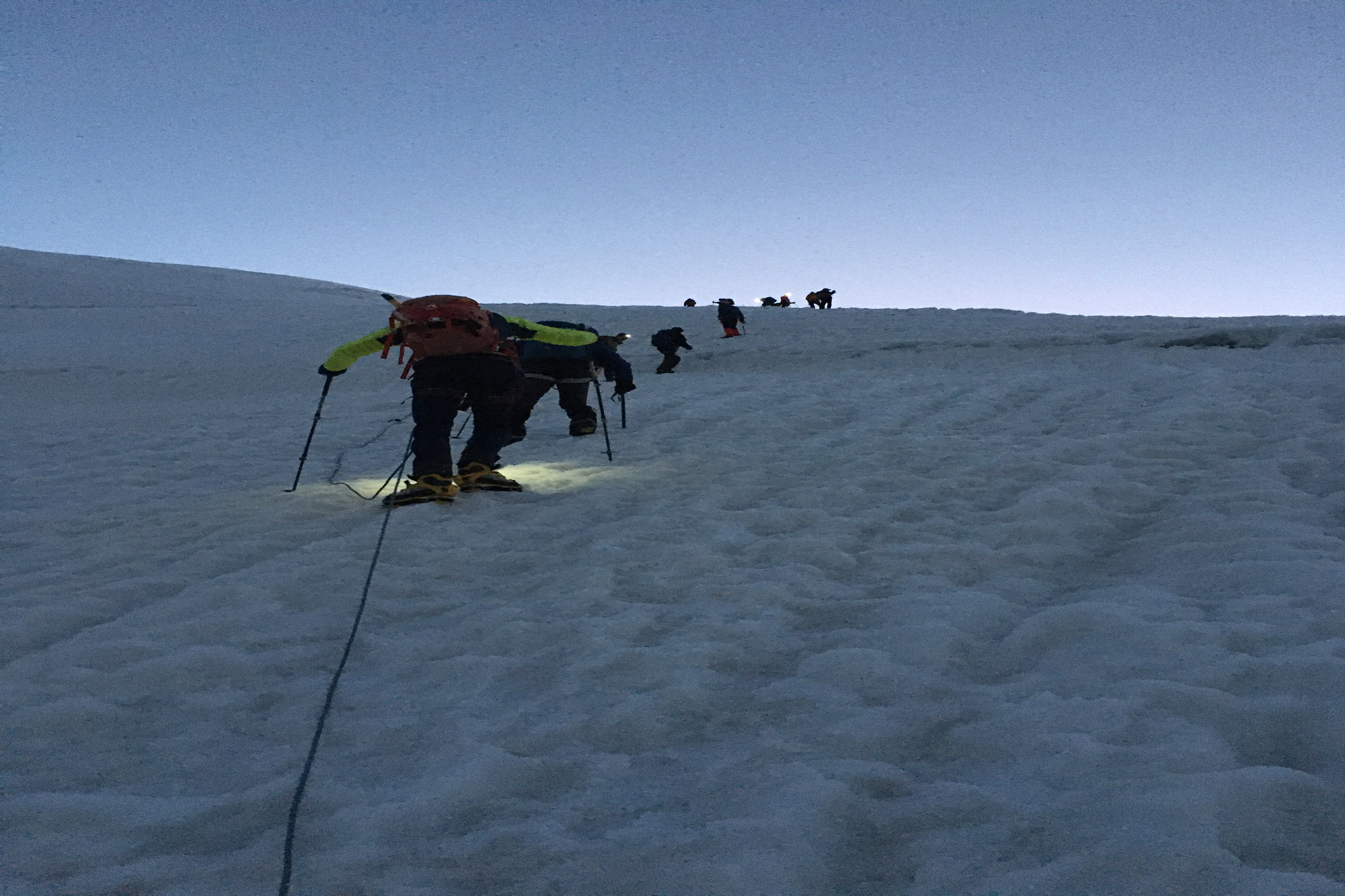
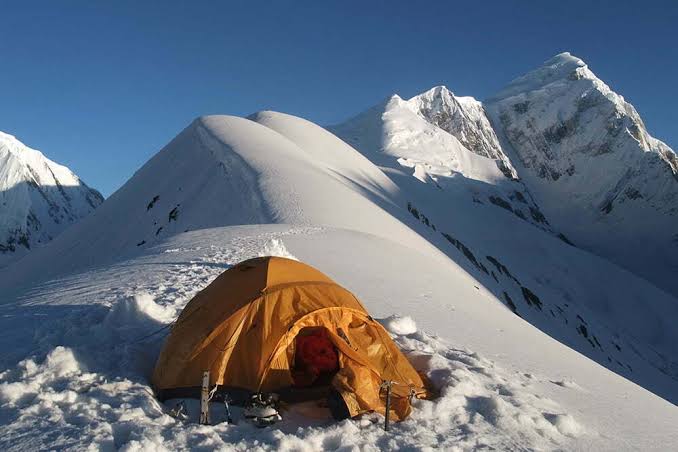
  • Day 09 – Day 30: From Bolucho to Base Camp (for acclimatization and climbing 20 days). We will establish three high-altitude camps to climb Spantik. Alternating between these camps will help acclimatize the team; this is the key to success. Certain parts of the route between different camps will be equipped with fixed cords for safety and going and coming without any hassles. We will climb about 8 km up to the origin of Chogo Lungma Glacier to set up Camp 1 at 4550 meters. Camp 2 and Camp 3 are installed at mini summits of the southeastern ridge with a 360º view. The route from Camp 1 up to 5100 m altitude consists of many ice pitches with many crevasses, requiring 8 ropes for a fixed line. Beyond this point, up to Camp 2, no rope is required. The climb from Camp 2 at 5500 m to Camp 3 at 6550 m comprises ice with some dangerous steep crevasses, requiring 6 ropes to fix on this section. From Camp 3 to the summit, two ropes will be enough as safety ropes.
  • Day 31: Return to Bolucho. Overnight at camp
  • Day 32: Return to Chogo Brangsa. Overnight at camp.
  • Day 33: Return to Arandu. Overnight at camp.
  • Day 34: Return to Skardu. Drive by jeep to Skardu. Overnight at a hotel. Day 34: Islamabad/Chilas. Fly to Islamabad at 1120 hrs (subject to weather conditions). Overnight at a hotel. In case of flight cancellation, drive to Chilas. Overnight at a hotel.
  • Day 35: Islamabad
  • Government-Licensed Professional Guide & Expedition Leader
  • Airport Transfers
  • Domestic Flights & Transfer
  • Private Ground Transportation
  • Accommodation
  • Meals
  • Expedition Logistics & Ground Support
  • Government Permits & Documentation
  • Travel insurance
  • Visa to Pakistan (Letter of Invitation and other supporting documents will be offered by us for visa application)
  • International flights (return tickets)
  • Tips for guides, porters, staff etc
  • Early Wind-up
  • Miscellaneous (drinks, telephone calls, laundry etc at hotels)
  • Souvenirs
  • Things that are not mentioned in Cost Included section

Equipment List We are providing you with three lists for the Trek. List 1 and 2 contain items and equipments that you must bring. The third list contains optional items you might need on your trekking holiday. Based on your own judgment you can select things that you might need from the third list. List 1 – Must Bring Items:

  • First Aid Pack (Diamox (Altitude), Dioralite (re-hydration salts), antiseptic cream, blister treatment, throat lozenges, plasters, Imodium (diarrhea treatment), painkillers)
  • Hiking Backpack (Day Pack) 32-42 Litres
  • Fleece jacket with hood or a warm jumper
  • Mittens or gloves
  • Gloves (Thermal)
  • Headtorch with spare batteries
  • Hiking boots
  • Sleeping bag (-16°C comfort rated)
  • Sandals (sports) or old shoes (to cross rivers)
  • Sun protection cream (including total block for nose, lips etc.)
  • Sunglasses
  • Sunhat
  • Thermarest or any similar mat/pad for sleeping
  • Warm hat
  • Warm jacket (down)
  • Water bottles 1 liter (x2)
  • Waterproof jacket
  • Waterproof over-trousers
  • Antibacterial hand wash
  • Shirts/T-shirts
  • Small towel
  • Socks
  • Spare laces
  • Underwear (normal and thermal)
  • Trekking poles (highly recommended)
  • Wash-bag and toiletries
  • Walking socks (2/3 pairs)
  • Baselayer – leggings (Thermal)
  • Trekking Trousers
  • Baselayer thermal shirts (2 long sleeves, 2 short sleeves)
  • Mountaineering equipment (See “List 2” below)

List 2 – Mountaineering Equipments:

  • Crampons
  • Mountaineering boots that must be compatible with your crampons. Minimum Grade B2.
  • Ice axe
  • Climbing harness
  • Karabiner/Carabiner (screwgate type x 2)
  • Climbing helmet
  • Prusik loops X two (2) – (4 meters of 6 mm cord makes up 2)
  • Sling (120 cm)

List 3 – Optional:

  • Buff or scarf
  • Small padlock (for locking your bag)
  • Camera
  • Insect repellant
  • Pen-knife (important: pack sharp tools in hold luggage)
  • Repair kit (e.g. thread, needle, duct tape)
  • Liner (for sleeping bag)
  • Travel clothes
  • Bottle for Pee

Minimum Group Participants and holiday Status The required number of participant bookings i.e. six (6) registrations are required to conduct the “Fixed departures”. Although we receive several guests for each fixed departure, we feel that it is important to mention it. You can make sure of the trip status on this page. Status “available” means we are registering guests and “guaranteed” means we have crossed the required number of participants and the trip will commence on the given dates. We will constantly be in touch with all our guests who register. We will timely guide you step by step regarding visa applications and flight reservations to Pakistan etc.

Travel Documents & Visa In order to apply for visas to Pakistan, you generally need a passport expiring later than (6) months. For more reliable and updated information, we suggest you to contact the nearest Pakistani consulate or embassy in your country. We expect that you will take full responsibility for ensuring you have the right travel documents. Normally if you are visiting non-EU countries, you must check for 2 vacant pages in your travel document (passport) for every country you plan to travel. A tourist visa (visit visa) is required to come to Pakistan for trekking. People on work visas (already in Pakistan/abroad) require a No-Objection Certificate (NOC) which normally takes up to 6 weeks. The requirements and fee for tourist visas to Pakistan is normally around 200 USD but for accurate information you should consult Pakistani consulates nearby. To apply for a tourist visa, you will need a Letter of Invitation from our company and sometimes a duplicate (copy) of the “government trekking permit” for the group, processed by us. We will help you with all necessary documents to obtain the visa once you register with us.
Dive Deeper or Connect with Us

Let's talk! We're here to navigate your queries and guide you further.

Proceed Booking