+923554945378
[email protected]

Region: Gilgit-Baltistan & Khyber Pakhtunkhwa, Pakistan
“Some lakes you drive to. Others you earn – step by step, breath by breath, until the turquoise water appears like a mirage between snow-capped giants.”
Pakistan is home to some of the highest alpine lakes on Earth. Scattered across the Karakoram, Himalaya, and Hindu Kush ranges, these bodies of water sit at elevations where the air is thin, the nights are cold, and the views are nothing short of extraordinary.
But here’s what many travelers don’t realize: you don’t need to be an elite mountaineer to reach them. While some require multi-day expeditions across glaciers, others are accessible via short treks or even jeep rides.
This guide covers the 5 highest trekking-accessible lakes in Pakistan – from the highest alpine lake in the country (Rush Lake) to the remote, windswept Karomber Lake near the Afghan border. Each entry includes elevation, difficulty, trek duration, best time to visit, and what makes it special.
At a Glance: The 5 Highest Trekking Lakes in Pakistan
1 Rush Lake 4,694m Nagar Valley, Hunza Moderate–Challenging 4–6 days
2 Karomber Lake 4,272–4,304m Broghil Valley, Chitral Moderate–Challenging 2–3 days (from trailhead)
3 Sheosar Lake 4,142m Deosai Plains, Skardu Easy 1 day (jeep + short walk)
4 Ansoo Lake 4,100m (approx.) Kaghan Valley, Naran Challenging 2–3 days
5 Saiful Muluk 3,224m Kaghan Valley, Naran Easy 2–3 hours (jeep or trek)
Part 1: Rush Lake – The Highest Alpine Lake in Pakistan (4,694m)
The Overview
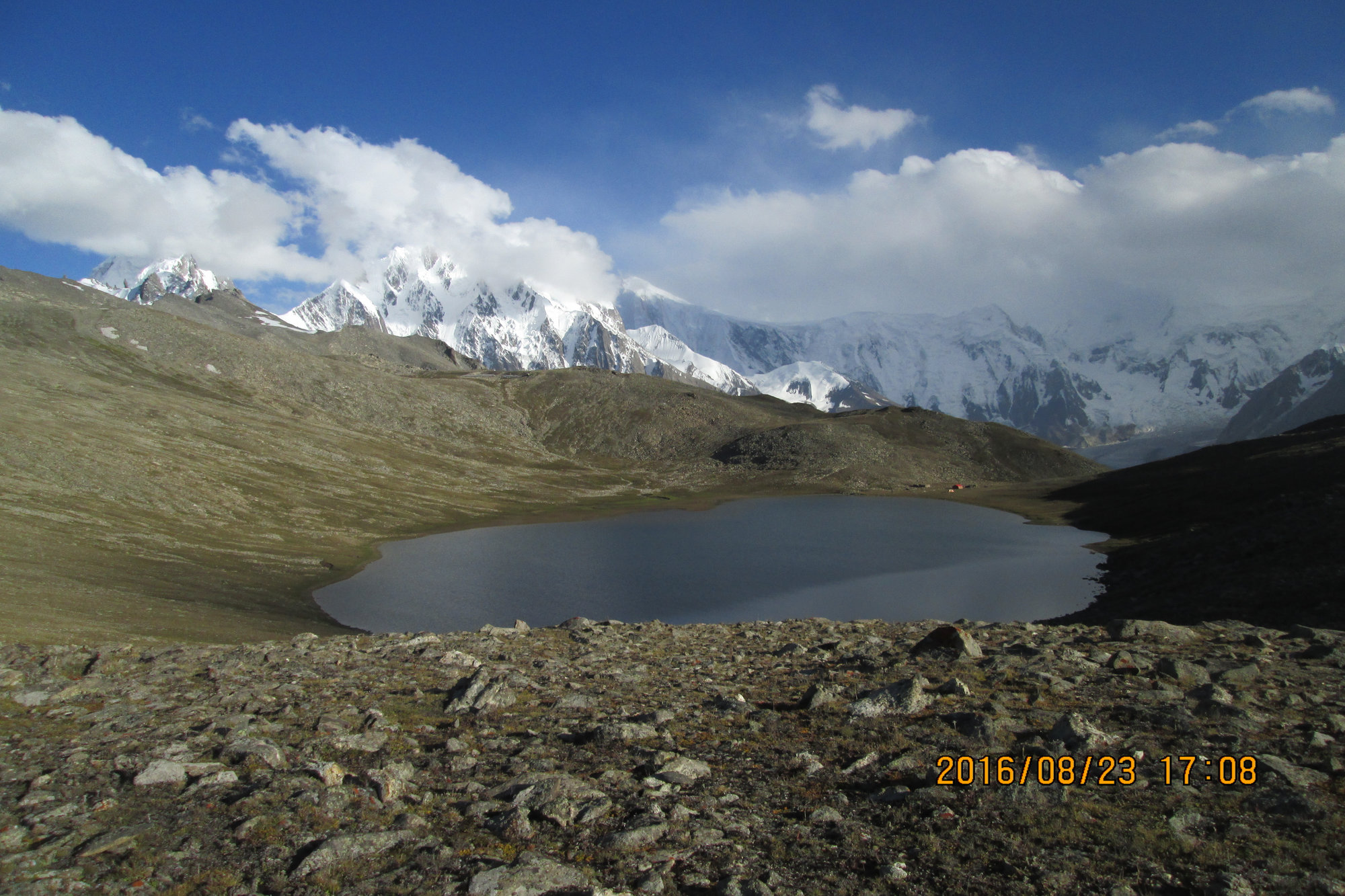
Rush Lake is the highest alpine lake in Pakistan and one of the highest in the world, sitting at an impressive 4,694 meters (15,400 feet) above sea level . Located in the Nagar Valley of Gilgit-Baltistan, near the famous Hunza region, this turquoise gem is surrounded by some of the Karakoram’s most dramatic peaks.
Why It’s Special
Rush Lake isn’t just about the altitude – it’s about the journey. The trek takes you across two glaciers (the Bualtar and Barpu glaciers), through alpine meadows, and past shepherds’ huts. On exceptionally clear days, you can glimpse K2 (8,611m) in the distance, along with Spantik (Golden Peak), Malubiting, Ultar Sar, and Rakaposhi .
The optional ascent of Rush Peak (5,098m) is a non-technical climb that rewards you with a 360° panorama of the Karakoram skyline.
Trek Details
Detail Information
Starting point Hoper Village, Nagar Valley (~2,800m)
Trek duration 4–6 days (round trip from Hoper)
Total trip from Islamabad 8–12 days
Distance ~38–43 km round trip
Difficulty Moderate to Challenging
Glacier crossings 2–4 (Bualtar, Barpu, Miar glaciers)
Best time Mid-July to mid-August
Sample Itinerary (5 Trekking Days)
Day Section Hiking Time Notes
1 Hoper → Bari Chakor Camp 7–8 hours Cross Bualtar & Barpu glaciers; camp at 3,215m
2 Bari Chakor → Chittan Harai 6–7 hours Steep climb; gain 1,085m in 4km; camp at 4,300m
3 Chittan Harai → Rush Lake 2 hours Reach the lake at 4,694m; optional Rush Peak ascent (3 hours)
4 Rush Lake → Hapakun 7–8 hours Descend; cross Miar Glacier; camp at 3,330m
5 Hapakun → Hoper 3 hours Final glacier crossing; trek ends
Pro Tips
· This is not a beginner trek. The sudden altitude gain (1,085m in 4km on Day 2) makes altitude sickness a real risk .
· The trek is mostly dry – carry at least 3 liters of water per day .
· Acclimatization matters. Spend a night in Karimabad or Hoper before starting.
· Best views are at sunrise from Rush Lake – the peaks turn gold.
Part 2: Karomber Lake – Pakistan’s 2nd Highest Natural Lake (4,272–4,304m)
The Overview
Karomber Lake is the second-highest naturally active lake in Pakistan and ranks as the 33rd highest lake in the world . Located in the remote Broghil Valley of Upper Chitral, near the borders of Afghanistan and Tajikistan, this turquoise jewel sits at the confluence of the Hindu Kush, Pamir, and Karakoram ranges .
Why It’s Special
Karomber Lake is unique because it is biologically active – despite its extreme altitude, it supports aquatic life, making it a rare “active” high-altitude lake . The setting is surreal: rolling green meadows, crystal-clear streams, and snow-capped peaks reflecting in the still water. Trekkers also encounter Wakhi shepherd communities who offer black tea, yogurt (pai), and warm hospitality .
The lake is fed by the Karomber River, which is a tributary of the Gilgit River. The area is a UNESCO-recognized biodiversity hotspot .
Trek Details
Detail Information
Starting point Lashkargaz (last jeep-accessible settlement)
Trek distance ~25 km one-way
Trek duration 8–10 hours one-way (2–3 days round trip)
Total trip from Islamabad 9–10 days
Difficulty Moderate to Challenging (altitude)
Best time June–September
Route Options
Route Difficulty Notes
Chitral via Mastuj & Broghil Beginner-friendly Gentle slopes; recommended for first-timers
Ishkoman Valley via Shutargardan Advanced 3-day trek with glacier crossings
Chapursan Valley via Chilinji Pass Expert Crosses 5,243m pass
Pro Tips
· Permits required. Karomber Lake is in a restricted border zone – you need an NOC .
· Remote. Bring all supplies – no facilities beyond Lashkargaz.
· Wakhi culture. Spend time with the local shepherds – their hospitality is legendary .
Part 3: Sheosar Lake – The “Blind Lake” of Deosai Plains (4,142m)
The Overview
Sheosar Lake (also known as “Blind Lake”) sits in the heart of Deosai National Park – the second-highest plateau in the world after the Tibetan Plateau. At 4,142 meters, this lake is famous for its mirror-like reflections of the surrounding peaks and its population of Himalayan brown bears.
Why It’s Special
Unlike other high-altitude lakes that require multi-day treks, Sheosar Lake is accessible via jeep from Skardu (4–5 hours) followed by a short walk. The setting is otherworldly: a vast, rolling plateau of wildflowers (in summer) with snow-capped peaks on the horizon and the turquoise lake in the middle.
Deosai National Park is a protected area, home to the Himalayan brown bear, ibex, golden marmots, and over 100 species of birds . The silence here is profound – no villages, no shops, no crowds.
Trek Details
Detail Information
Location Deosai National Park, Skardu
Elevation 4,142m
Access 4×4 jeep from Skardu (4–5 hours) + short walk
Difficulty Easy (jeep-assisted)
Best time July–September (park open)
Pro Tips
· Deosai closes in winter (October–June). Plan for July–September.
· Bring warm clothes. Even in July, temperatures can drop below freezing at night.
· Camping is allowed – the stargazing here is among the best in Pakistan.
· Keep distance from wildlife – the brown bears are wild and dangerous.
Part 4: Ansoo Lake – The Teardrop Lake (4,100m)
The Overview
Ansoo Lake – named for its distinctive teardrop shape – is a hidden gem perched above the Kaghan Valley. Located near Saiful Muluk, this lake requires a challenging 2–3 day trek that crosses glaciers and steep moraines.
Why It’s Special
The name “Ansoo” means “teardrop” in Urdu, and the lake’s shape is exactly that – a perfect teardrop nestled in a glacial cirque . The trek is not for the faint-hearted, but those who make it are rewarded with one of the most unique lake views in Pakistan. The lake is often frozen even in summer, adding to its ethereal beauty.
Trek Details
Detail Information
Starting point Saiful Muluk Lake (jeep from Naran)
Trek duration 2–3 days round trip
Distance ~15–20 km one-way
Difficulty Challenging (steep, glacier crossings)
Best time July–August (lake visible; earlier months may have snow)
Sample Itinerary
Day Activity
1 Naran → jeep to Saiful Muluk → trek to base camp (3–4 hours)
2 Base camp → Ansoo Lake → return to base camp (7–8 hours)
3 Descent to Saiful Muluk → jeep to Naran
Pro Tips
· Hire a local guide. The trail is not marked, and glacier crossings require experience.
· Start early from Saiful Muluk – the trek is long and daylight is limited.
· Check snow conditions. Early summer (June) may have snow blocking the route.
Part 5: Saiful Muluk – The Fairy Tale Lake (3,224m)
The Overview
Saiful Muluk is the most famous alpine lake in Pakistan – and for good reason. Located in the Kaghan Valley near Naran, this emerald-green lake sits at 3,224 meters, surrounded by the towering peak of Malika Parbat (the “Queen of Mountains”) .
Why It’s Special
The lake is steeped in legend – a Persian fairy tale of Prince Saiful Muluk who fell in love with a fairy princess at this very spot. On calm mornings, the lake reflects Malika Parbat perfectly, creating a scene that looks like a painting .
Unlike other lakes on this list, Saiful Muluk is accessible by jeep (9 km of rugged track from Naran) . But the 2–3 hour trek from Naran is a popular option for those who want to earn the view.
Trek Details
Detail Information
Location Kaghan Valley, near Naran
Elevation 3,224m
Access Jeep (30–40 min) or trek (2–3 hours)
Difficulty Easy (trek)
Best time May–September
Activities
· Boating – small paddle boats available in summer
· Camping – camp near the lake for sunrise views
· Photography – the reflection of Malika Parbat at sunrise is world-class
· Trekking – the Ansoo Lake trek begins here
Pro Tips
· Visit early morning or late afternoon – midday crowds can be heavy
· Bring warm layers – even in summer, evenings are cold
· Mobile signal is weak – download offline maps before arriving
Part 6: Comparison Table – Choosing Your Lake
Lake Elevation Difficulty Days Needed Best For
Rush Lake 4,694m Moderate–Challenging 8–12 days total Glacier trekking, K2 view, Spantik views
Karomber Lake 4,304m Moderate–Challenging 9–10 days total Remote wilderness, Wakhi culture, untouched
Sheosar Lake 4,142m Easy 2–3 days from Skardu Wildlife (brown bears), Deosai Plateau
Ansoo Lake ~4,100m Challenging 2–3 days from Naran Teardrop shape, adventure seekers
Saiful Muluk 3,224m Easy 1 day Families, photographers, fairy tale setting
Part 7: Honorable Mentions
These high-altitude lakes are spectacular but either require expeditions or are not trekking-accessible:
Lake Elevation Notes
Paristan Lake ~4,500m Near Rush Lake; requires technical climbing
Katora Lake ~3,500m Swat Valley; shorter trek
Mahodand Lake ~2,900m Swat Valley; jeep-accessible
Batura Lake ~3,500m Near Passu; requires Batura Glacier trek
Part 8: Practical Tips for High-Altitude Lake Trekking
Acclimatization
All lakes on this list are above 3,200m – altitude sickness is a real risk. Follow these rules:
· Ascend slowly. Don’t go from Islamabad (500m) to 4,000m in one day.
· Spend a night at intermediate elevation (Karimabad at 2,400m, Skardu at 2,200m, Naran at 2,400m).
· Hydrate relentlessly. Drink 4–5 liters of water daily.
· Know the signs of AMS: headache, nausea, fatigue, confusion. Descend if severe.
Packing Essentials
Item Why
Layered clothing Temperatures swing from warm days to freezing nights
Sturdy hiking boots Terrain is rocky, steep, and uneven
Trekking poles Essential for glacier crossings and steep descents
Sun protection (SPF 50+, sunglasses) UV is intense at altitude
Water purification Streams are available but not sterile
Power bank No electricity at most lakes
Warm sleeping bag Rated to -5°C or lower
Best Time for 2026
Lake Best Window Notes
Rush Lake Mid-July to mid-August Short season; check snow conditions
Karomber Lake June–September July–August best for wildflowers
Sheosar Lake July–September Park opens after snowmelt
Ansoo Lake July–August Lake visible; earlier months have snow
Saiful Muluk May–September July–August most crowded
Permits
· Rush Lake, Sheosar Lake, Ansoo Lake, Saiful Muluk: Open zones – no permits required.
· Karomber Lake: Restricted zone – NOC required .
The Bottom Line
Pakistan’s highest alpine lakes are among the most spectacular sights in the world. From the glacier-crossed journey to Rush Lake to the fairy tale setting of Saiful Muluk, each offers a unique window into the raw beauty of the Karakoram, Himalaya, and Hindu Kush.
Choose your lake based on your fitness, available time, and desire for adventure. Start with Saiful Muluk or Sheosar if you’re a beginner. Work your way up to Rush Lake or Karomber. And if you’re truly adventurous, point your boots toward Ansoo Lake.
The water is cold, the air is thin, and the views are unforgettable.
“Some lakes you see. Others you earn. These are the ones worth earning.”
2026 Trek Packages
👉 [Book Rush Lake Trek 2026] https://pamircrest.com/tour/rush-lake-trek-journey-to-pakistans-highest-alpine-lake-at-4694m/