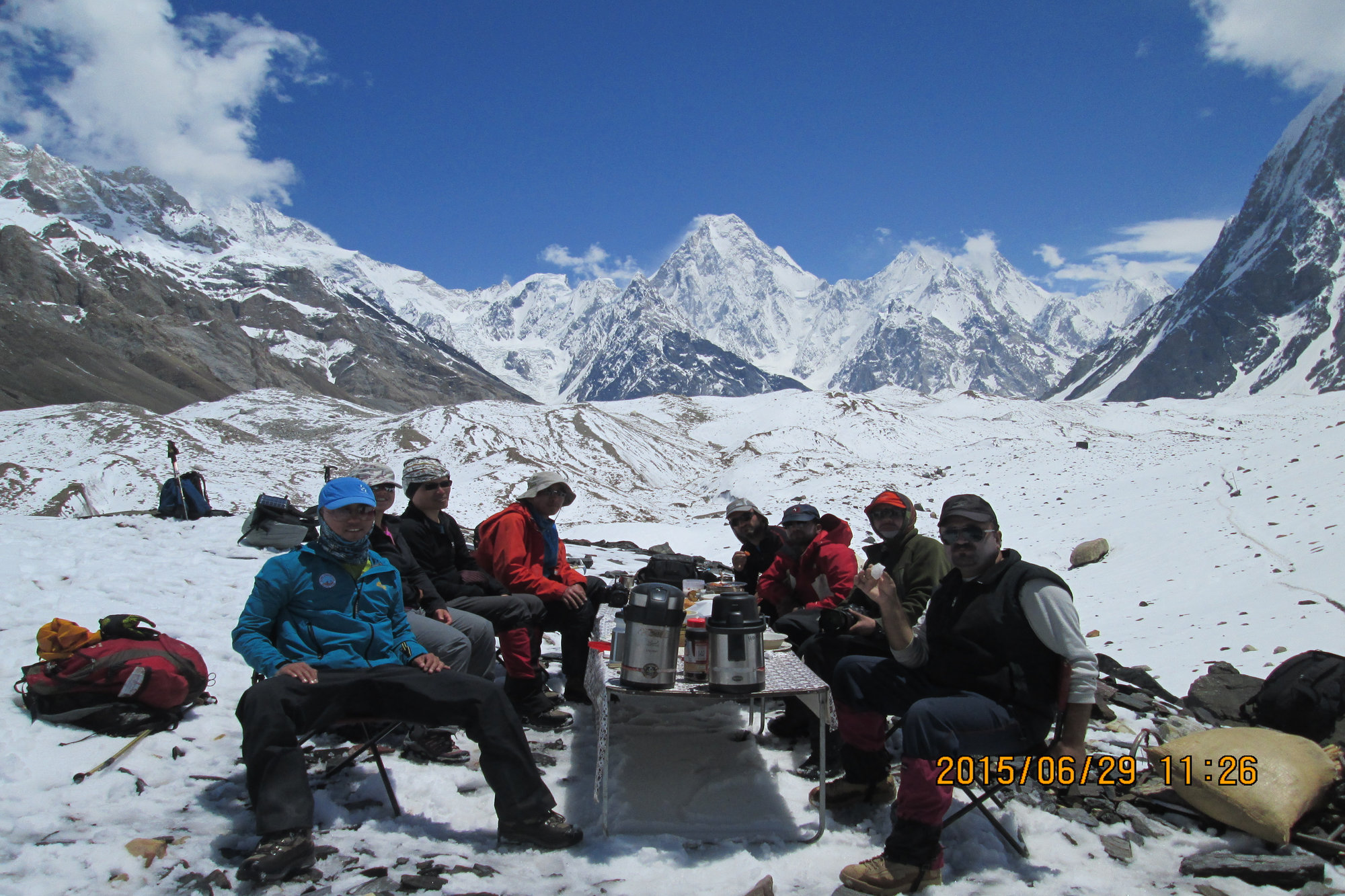

Some treks are hikes. This one is a pilgrimage.
The K2 Base Camp Trek isn’t just a trail—it’s a journey into the heart of the Karakoram, where mountains don’t just rise; they explode out of the earth. You’ll walk on the Baltoro Glacier, stand at Concordia (the “Throne Room of the Mountain Gods”), and look up at K2—the world’s second-highest peak—from just a few kilometers away.
This is a complete 2026 guide. No fluff. Just everything you need to know: difficulty, gear, weather, permits, views, and why this trek belongs on your bucket list.
Why the K2 Base Camp Trek?
Simple: nowhere else on Earth gives you this concentration of 8,000-meter giants.
From Concordia—the confluence of the Baltoro and Godwin-Austen glaciers—you can see four of the world’s fourteen 8,000m peaks in a single 360° sweep:
· K2 (8,611m) – The Savage Mountain
· Broad Peak (8,047m)
· Gasherbrum I (8,080m)
· Gasherbrum II (8,035m)
And that’s not counting the dozens of 6,000m and 7,000m neighbors. The scale is almost impossible to process. Your camera won’t capture it. Your words won’t describe it. You just have to go.
Famous Spots Along the Trek
Spot Elevation Why It’s Famous
How Difficult Is the K2 Base Camp Trek?
Rating: Strenuous
This is not a casual trek. Here’s what you’re signing up for:
You need:
You do NOT need:
Good guides and porters handle route-finding across the glacier. Your job is to walk, hydrate, and stare at the mountains.
Best Time to Trek in 2026
The window is narrow: late June to mid-August.
Month Conditions Verdict
Late June Snow possible at higher camps, but fewer trekkers. Good for solitude. ✅ Good if you’re experienced
July Most reliable weather. Daytime temps: 5–15°C (41–59°F) at lower glacier; -5 to 5°C (23–41°F) at Concordia. ✅✅ BEST
Early August Still good. Slightly warmer, but afternoon clouds more common. ✅ Very good
Late August Risk of early snow on passes. Still possible but less ideal. ⚠️ Only for experienced
September Too cold. Nights drop to -15°C (5°F) or lower. Snow likely. ❌ Not recommended
Pro tip for 2026: July is peak season. Book by March at the latest. If you want fewer crowds, try last week of June or first week of August.
Weather Conditions on the Trek
The Karakoram creates its own weather. Be prepared for anything.
By elevation:
· Askole to Urdukas (3,000–4,000m): Days 10–20°C (50–68°F). Nights near freezing.
· Goro II to Concordia (4,200–4,600m): Days 0–10°C (32–50°F). Nights -5 to -10°C (23–14°F).
· K2 Base Camp (5,100m): Days -5 to 5°C (23–41°F). Nights -10 to -15°C (14–5°F).
Common conditions:
· Sun: Intense. You will burn without SPF 50+ and good sunglasses.
· Wind: Often strong, especially at Concordia and Base Camp. Windchill is real.
· Precipitation: Rare in July, but afternoon cloud build-ups can bring light snow or graupel (soft hail).
· Glacier effect: Even on sunny days, the ice reflects cold upward. You’ll feel it.
One weird truth: You might sweat while hiking in a t-shirt, then shiver the moment you stop. Layering is everything.
What Gear You Will Need:
This is a glacier trek. Cheap gear fails. Don’t risk it.
Footwear
· Trekking boots: High-ankle, waterproof, broken-in. La Sportiva, Scarpa, or Lowa quality.
· Camp shoes: Lightweight sandals or down booties (the ground is cold rock).
· Socks: 4–5 pairs of merino wool. No cotton.
Clothing
Layer Item Spec
Base Merino wool top & bottom (2 sets) 150–200g weight
Mid Fleece jacket Grid fleece or similar
Mid heavy Lightweight down or synthetic jacket (e.g., Patagonia Nano Puff) For cool hiking
Outer Waterproof/windproof shell jacket & pants Gore-Tex or equivalent
Belay / Camp Heavy down parka 700+ fill power, hooded
Legs Trekking pants (2), thermal leggings (1 heavy for camp) No jeans
Head Warm beanie, sun hat with neck flap, buff/neck gaiter
Hands Liner gloves + waterproof/windproof mittens or heavy gloves
Sleeping Gear
· Sleeping bag: Rated to -15°C (5°F) or lower. Down is lighter but must stay dry.
· Sleeping pad: R-value of 4.0 or higher. You’re sleeping on ice and rock.
Tech & Accessories
· Trekking poles: Absolutely essential. Your knees will thank you.
· Headlamp: 200+ lumens. Extra batteries.
· Sunglasses: Category 4 (glacier glasses) with side shields. Snow blindness is no joke.
· Sunscreen & lip balm: SPF 50+ minimum. Apply constantly.
· Water system: 2x 1L bottles + wide-mouth thermos (hot drink at camp). Bladders can freeze.
· Water purification: Filter (e.g., Sawyer) or iodine tablets. Glacier melt is clean but treat anyway.
· Power bank: 20,000 mAh minimum. No electricity for 12+ days.
· Camera: Obviously. Plus spare memory cards and batteries (cold kills batteries fast).
Health & First Aid
· Personal prescription meds
· Diamox (Acetazolamide): For altitude sickness prevention (consult your doctor)
· Ibuprofen, Imodium, antihistamines
· Blister kit (moleskin, leukotape, sterile needles)
· Hand sanitizer, wet wipes, toilet paper (pack out what you pack in)
· Lightweight emergency bivvy (optional but smart)
Porters vs. Personal Carry
You will not carry your full 15–20kg pack. Standard setup:
· Personal daypack (20–30L): Water, snacks, camera, fleece, shell, sunscreen, first aid
· Duffel (porter carries): Sleeping bag, sleeping pad, extra clothes, toiletries
· Weight limit for porter duffel: Usually 12–15kg. Overweight costs extra.
What to Carry: Complete Packing List Summary
Category Must-Haves
Clothing Merino base layers (2), fleece, light down jacket, heavy down parka, shell jacket/pants, trekking pants (2), thermal leggings, 4–5 merino socks, warm hat, sun hat, buff, liner gloves, heavy gloves/mittens
Footwear Broken-in trekking boots, camp shoes
Sleep -15°C sleeping bag, R4+ sleeping pad
Tech Headlamp + batteries, power bank, camera, glacier glasses (cat 4)
Health Sunscreen SPF 50, lip balm, first aid kit, Diamox, blister kit, hand sanitizer, wet wipes, toilet paper
Hydration 2x 1L bottles, thermos, water purification
Misc Trekking poles, daypack (20–30L), duffel (porter), small towel, trash bags (leave no trace)
Do not bring: Cotton anything, heavy books, more than 15kg total, valuables you’d miss.
How to Travel to the Trek Start
Step 1 – Reach Pakistan
Fly into Islamabad International Airport (ISB) . Most international flights connect via Dubai, Doha, or Istanbul.
Step 2 – Get to Skardu (The Gateway)
Two options:
Method Duration Cost Reliability
Fly 1 hour Weather-dependent (often cancelled)
Drive (KKH) 20–24 hours Reliable but long
Our recommendation: Fly if you can afford the buffer days (flights cancel ~30% of the time). Drive if you have time and want to see the Karakoram Highway.
Step 3 – Skardu to Askole (Trailhead)
Private 4×4 jeep: 7–8 hours on a rough, narrow road. You’ll share with your group and gear. It’s bumpy. It’s dusty. It’s unforgettable.
Step 4 – Trek begins
Askole village (3,050m) is the last human settlement. From here, you walk.
Permits: You need a trekking permit for the Central Karakoram National Park. We arrange this for you. Do not try without one.
The Daily Itinerary (14-Day Classic)
Day Section Hiking Time Elevation Change Notes
1 Skardu → Askole (drive) 7–8 hrs drive N/A Last village
2 Askole → Jhula 5–6 hrs 3,050m → 3,200m First views of Braldu River
3 Jhula → Paiju 5–6 hrs 3,200m → 3,400m Enter Baltoro Glacier
4 Rest at Paiju – – Acclimatization; view of Trango Towers
5 Paiju → Urdukas 4–5 hrs 3,400m → 3,800m Stunning campsite
6 Urdukas → Goro II 5–6 hrs 3,800m → 4,200m High, cold, spectacular
7 Goro II → Concordia 5–6 hrs 4,200m → 4,600m Arrive at Throne Room
8 Rest at Concordia – – Acclimatization; 360° peak views
9 Concordia → K2 Base Camp → Concordia 7–8 hrs 4,600m → 5,100m → 4,600m Long day. Worth every step.
10 Concordia → Ali Camp (optional Gasherbrum side trek) 5 hrs 4,600m → 5,000m For strong groups
11 Return to Goro II 5 hrs 5,000m → 4,200m Descent begins
12 Goro II → Paiju 6–7 hrs 4,200m → 3,400m
13 Paiju → Askole 6–7 hrs 3,400m → 3,050m Last night on trail
14 Askole → Skardu (drive) 7–8 hrs N/A Hot shower. Real food.
Optional extra days: Side trek to Baltoro Kangri viewpoint (+2 days), extra rest at Concordia.
What Views Are on the Way (Day by Day)
· Paiju: First real view of the Baltoro Glacier—a river of rock and ice stretching to the horizon.
· Urdukas: Trango Towers rising like granite skyscrapers. Rock climbers weep here.
· Goro II: Mustagh Tower and Masherbrum (7,821m) in golden evening light.
· Concordia: The main event. Turn in a circle: K2, Broad Peak, Gasherbrum I & II, plus Mitre Peak, Chogolisa, and dozens more.
· K2 Base Camp: The savage mountain fills your entire field of vision. You can hear ice falling. You can feel its gravity. No photo prepares you.
Shimshal Pass Lake comparison note: Unlike the small alpine lake at Shimshal Pass, the K2 trek has no lake at Base Camp—just ice, rock, and glory. But the views are on an entirely different scale.
Acclimatization & Altitude Sickness
This trek goes high. Here’s how to stay safe:
· Walk slowly. “Pole pace” – slow and steady.
· Drink 4–5 liters of water per day. Force yourself.
· Climb high, sleep low on rest days (e.g., hike partway to a viewpoint, return to same camp).
· Know the signs of AMS:
· Mild: headache, nausea, fatigue, trouble sleeping (common – rest and hydrate)
· Severe: vomiting, confusion, loss of coordination, shortness of breath at rest → descend immediately
Diamox helps prevention but is not a cure. The only cure for severe AMS is down.
Permits, Costs & Logistics for 2026
Item Approximate cost (USD) Notes
CKNP trekking permit $50–100 Per person, per trek
Guide (mandatory) $1,500–2,500 for the trek Split among group
Porter (per porter) $20–30/day + tip Each porter carries ~15kg
Cooking staff & gear Included in most package
Jeep transfers (Skardu–Askole) $300–500 round trip Per jeep (3–4 people)
Total estimated cost (guided, all-inclusive):
· Budget group: $1,800–2,500 USD
· Mid-range (our typical): $2,800–3,800 USD
· Luxury/small group: $4,500+ USD
What a full package usually includes: Permits, guide, porters, all meals on trek, camping equipment (except sleeping bag), jeep transfers, hotel nights in Skardu before/after.
Not included: International flights, Pakistan visa, meals in cities, sleeping bag, personal gear, tips (budget $150–250 for staff), travel insurance (mandatory – must cover high-altitude trekking up to 5,500m).
2026 Departures with Pamir Crest Adventure Tours
We run small-group K2 Base Camp treks (max 8 trekkers) with local guides who have decades of Baltoro experience.
Start Date End Date Spots Left Notes
June 25, 2026 July 8, 2026 3 spots Early season, fewer crowds
July 9, 2026 July 22, 2026 5 spots Peak weather window
July 23, 2026 August 5, 2026 2 spots Best for warm temps
August 6, 2026 August 19, 2026 6 spots Late but still good
Price: $3,250 USD per person (double occupancy in Skardu, shared tents on trek)
Included: Everything except international flights, visa, sleeping bag, personal gear, tips, and insurance.
👉 [Check availability & book your 2026 K2 trek here] The Ultimate Karakoram Circuit: K2 Base Camp & Gondogoro La – Pamir Crest Adventure Tours
👉 [Download complete 2026 K2 trek info pack (PDF)]The Ultimate Karakoram Circuit: K2 Base Camp & Gondogoro La – Pamir Crest Adventure Tours – includes full itinerary, gear checklist, and fitness plan
Is the K2 Base Camp Trek Worth It?
Let me answer with a story.
A trekker named David sat with me at Concordia after a 7-hour day. He was exhausted. His feet hurt. The wind was picking up. And then the clouds parted on K2 for just 90 seconds.
He didn’t speak for five minutes. Then he said: “I’ve been to 30 countries. I’ve never seen anything like this.”
That’s the K2 Base Camp Trek. It’s hard. It’s cold. It’s expensive. And it’s absolutely, unquestionably worth every blister and every dollar.
“The mountains are not stadiums where I satisfy my ambition. They are the cathedrals where I practice my religion.” — Anatoli Boukreev
See you on the Baltoro.